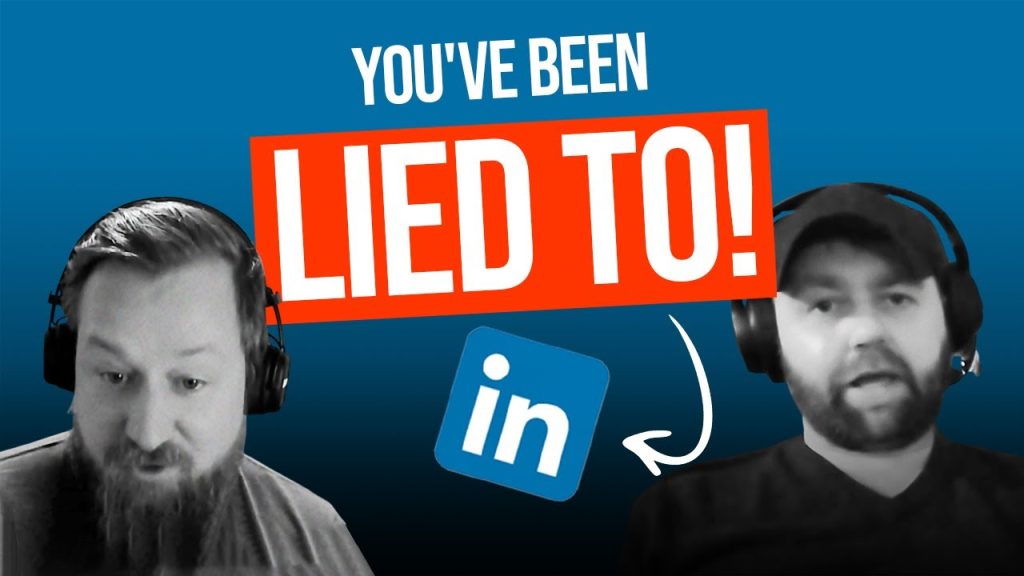
LinkedIn gurus have been lying to you about signing clients on LinkedIn.
Yes, I said it, and I’m not sorry.
I am sorry for all the busy business owners wasting their time listening to these pseudo-experts and getting fooled by their quick hacks, made-up strategies, and false claims.
But before we get into that…
Is it possible to grow a business using LinkedIn?
Absolutely. But not the way many keep claiming:
-
“Publish content regularly.”
-
“Make your content skimmable.”
-
“Steal the 10 hooks that made me $137,856 in 2 days.”
It sounds simple. It sounds easy.
We’re skeptical when we read it…
But we want it to be real.
So we read it, in the hopes that it’s this easy… And engage with it.
The post goes viral ‘cause users are interested.
But our revenue and client flow remain the same.
You can still find clients for your business on IN, easier than anywhere else, but you can’t rely on old tactics that only worked in certain conditions, just because someone with 570 likes (often fake) on a post said so.
If you can’t reproduce the exact same conditions, you’ll never get the same results, because these tactics are not based on the fundamentals of marketing and human behavior.
They’ve been taken out of their original context and sold as a one-size-fits-all business solution.
Tactics without Fundamentals: Where Most Small Businesses Get Trapped
A couple of years ago, a friend with more than 10,000 followers almost burned a IN account trying to monetize his audience…
Instead, he made $700+ in a week because I helped him understand how, when, and why people buy, and set up a system that sent the right message to them when those conditions became ideal.
He was attempting to pivot from selling services to digital products. To free up more of his time.
So he started posting about his courses.
Running promotions, discounts, etc.
But few buy from their social feed, and the diminishing returns aren’t worth those who do.
It’s an illusion.
His engagement started dropping with every post…
With only a handful of sales publications, he had tanked his organic distribution from 5,000 to 500.
You see, his reasoning was solid.
-
“I have knowledge and skills.”
-
“People hire me for those; they’re valuable.”
-
“My biggest asset is my LinkedIn audience – 10,000+.”
-
“I’ve seen ‘gurus’ selling their courses on LinkedIn. It must work.”
-
“My audience likes the stuff I share; they’ll love my products.”
It made sense to talk about his products on LinkedIn to get a few sales in.
But was it wise? You decide…
His audience ignored those posts – scrolled past them.
Which led to LinkedIn not distributing his publications at all.
If you scroll past something, it means you’re not interested, and the algorithm will stop showing similar content to you.
On average, only 5% of your IN followers see what you post.
If the first few read and engage with it, the algo will spread it wider. But if they start scrolling past, that number quickly sinks until your account is virtually useless.
Faux Metrics: Why Your Content Doesn’t Convert to Clients
Likes, comments, and shares don’t pay the bills!
“Oh but they show interest, and build my brand.” – I often hear.
Do they?
Let’s see…
On LinkedIn, engagement is hacked 90% of the time, not a real reaction to the value (or truth) of the content being interacted with.
-
I’ve posted thousands of posts on LinkedIn.
-
Have interviewed dozens of IN creators.
-
Analyze the performance of clients’ content every day.
-
And more importantly, carefully track what leads to what.
“Marketing without attribution is the most expensive business activity.”
How is it hacked?
Well, simple; by finding or joining a group of people who will interact with your posts in exchange for you doing the same. Aka engagement pods.
These pods can even be formed organically, as a product of reciprocity.
LinkedIn was built for networking, meaning its algorithm will always prioritize networking activities. Commenting on someone else’s post shows it to your own network, which compounds its distribution.
In other words, the more people you engage with, the more people will see your posts.
Is that a bad thing?
Not at all. But it can be dangerous if you don’t understand what it means.
Since crowds build credibility – “if they all trust him, it’s probably safe to do so myself” – a post with a lot of likes sounds trustworthy because we don’t stop to think where they came from.
We’ve all fallen for it.
This is just our inherent vetting instinct – by committee.
“If the tribe says it’s safe, it must be.”
It’s not until you start looking into the submerged part of the iceberg that you see for yourself how most of the results these ‘gurus’ and ‘guru-wannabes’ are claiming in their content are purposely missing context, exaggerated, or even just made up.
The reality is that most of these ‘gurus’ struggle to get enough clients to feed their businesses, and end up in one of two positions:
-
Claiming that LinkedIn (or organic content) is dead.
-
Selling LinkedIn services; Very much like a pyramid scheme, from my pov.
Nothing wrong with selling LinkedIn services, unless you do it because you can’t get clients for any other offer or service…
Which pretty much means you’ll be selling how to do what you couldn’t.
LinkedIn is Dead! – They say…
This platform is far from dead, like some so confidently claim…
What’s feeding these claims then?
Nothing new.
You see, like all other social media platforms, LinkedIn is now flooded with content. But that wasn’t always the case.
Remember when you thought of LinkedIn as an online CV you never updated?
Before 2020, you barely saw a user posting “valuable” content of any sort. All we saw in our feeds were role changes, job updates, etc. – and we only interacted with these posts to congratulate our connections.
Boring.
Some people – now known as IN gurus – started posting in the early days when there was no content to compete with.
Once-in-a-lifetime opportunity.
Think of it this way: if I were the only marketing consultant publishing content on LinkedIn and you needed marketing advice, there’s a good chance you’d reach out to me, right?
Well, that’s what happened a few years ago…
Subsequently, these people started sharing their experience signing a client just by posting content, then two clients, and three, and so on…
Seeing how easy it had been for them, others followed suit.
Fast-forward to 2026, when there’s enough content not only to fill up all users’ feeds, but to compete with yours, and all of this goes down the drain, which is why the number of impressions on your posts keeps going down…
…including gurus’ results:
-
They can’t sign clients anymore.
-
They struggle to get 1/10th of the impressions they used to.
-
Likes and comments are no more than impression-farming techniques.
There’s a lot more content per user; fewer users see each piece of content.
Content is King! (But not on IN)
So, should you stop posting content?
Not necessarily, but you shouldn’t force it either.
Content alone won’t bring you clients. It might help if used strategically, but if you’re a small business owner, you don’t need to be a content production machine.
And no, flooding the feed with AI-generated content won’t do anything to your bottom line either.
Everyone has access to ChatGPT.
They don’t want to read in their feed what they can ask the machine directly.
There’s ONE thing the chatbots can’t do, though…
But you can on LinkedIn.
Which is also what sets it apart from all other platforms:
→ Building. The. Right. Relationships.
How? You may be wondering…
Here’s the key many can’t see:
LinkedIn was built for networking, and that’s the only aspect of it they don’t want (or can’t) compromise.
And networking is also its most powerful feature.
(Fun fact: networking is also the most profitable business activity.)
But there’s more…
With tools like Sales Navigator or free search filters, you can easily find and connect ONLY with those who need your services – saving you from wasting your time with conversations that won’t advance your business.
In other words, LinkedIn is the biggest list of prospects you’ll ever find and gives you what you need to find, connect, and have conversations with them.
What else could someone running a service-based business ask for?
The Formula turning Connections into Clients…
If you came here looking for generic formulas that will undoubtedly work for you, you’re in the wrong place, but if you’re willing to accept that there’s no one-size-fits-all method to signing clients on LinkedIn – or anywhere else, keep reading, and you might find that you already have all the formulas you need.
Let’s look at this from a buyer’s pov:
Say you need a new website for your business. Something that showcases your expertise clearly and confidently to prospects.
Obviously, a cheap website from Fiverr won’t do much in that regard.
You’ll need at least a good designer and a copywriter, or an agency.
Before you even consider Googling those services, your brain immediately scans for who you know that does this for a living, doesn’t it?
“Oh, my friend Jenn is an amazing copywriter; she could do this for me.”
And if an agency reaches out to you in the meantime, I doubt you’d dump Jane to go with them, would you?
That’s because you trust Jane. She’s your friend. You’re loyal to her.
This goes both ways.
That’s the power of human relationships.
And when you approach marketing your business as a process to building mutually beneficial human relationships, you’ve found your formula.
It was always there.
I do recommend listening to this podcast, where we talk specifics about how Darren and Aleks do this on LinkedIn effortlessly, have fun with it, and build lifestyle-first businesses.
On your favorite podcasting platform!
The final LinkedIn Marketing Mastery podcast
We’ve interviewed all types of LinkedIn experts, marketers, and business owners on this podcast.
We’ve looked at marketing a small business on LinkedIn from every angle we could think of.
But LinkedIn – or any social media for that matter – is just the first piece of marketing.
Finding prospects, getting their attention, assessing and capturing their interest, converting them to clients, retaining them, getting them to advocate for you, etc…
These are all integral parts of marketing.
And LinkedIn won’t help you with more than three of the above, at best.
So we decided to wrap up the LinkedIn Marketing Mastery podcast and start a new series – Marketing with Integrity.
You’ll hear stories from real coaches and service-based business owners who have thriving businesses about:
-
How they got to where they are.
-
The lessons they learned along the way.
-
What they’d do differently the second time around.
We’ll talk real marketing, share strategies that worked (or not), and break down why, so you’ll know if it could work for you or not.
If this speaks to you, it’ll come in a separate publication within this account to which you can subscribe here to get delivered weekly to your inbox:
One More Episode …
There was someone else we needed to hear from for the final episode, but this one was already too long. So we recorded another short segment, which is coming next week. Stay tuned.
Ready to transform your LinkedIn strategy?
Share your thoughts in the comments below!
Follow our guests!
Links mentioned:
–https://creationcodes.substack.com/su…